

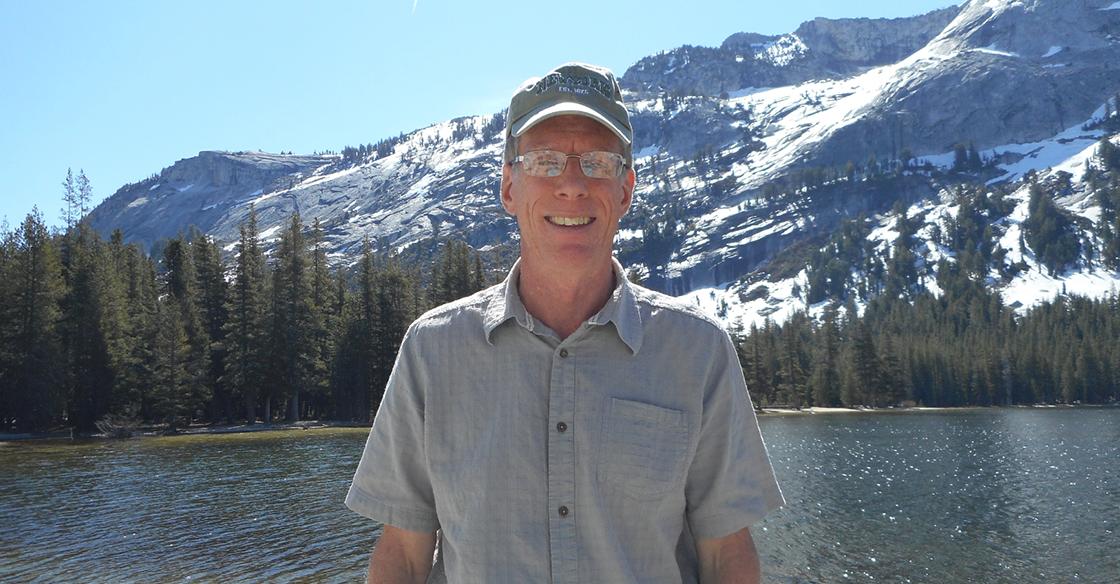
The night before his open-heart surgery, Rob Clish (pictured above) and his wife, Ruth, went out for dinner.
They chose a local restaurant near the hospital, ordered a good meal and tried to keep things light.
“I joked with her that it might be my last supper,” Rob recalls.
He smiles when he says it now but, he explains that in that moment, the reality of what lay ahead was hard to ignore.
“It’s a major operation,” he says. “I was quite anxious leading up to it.”
At 69, Rob had been living with a mitral valve condition for nearly 20 years — something carefully monitored over time. For years, it didn’t interfere with his life.
He and his wife loved to travel. At home in Nova Scotia, they spent as much time as possible outdoors — walking and hiking through the woods, enjoying the quiet and the fresh air.
But last year, things began to change.
“I was getting more and more out of breath…even going up a few steps, I’d have to stop,” he says. “That’s when I knew something wasn’t right.”
As his symptoms progressed, it became clear that surgery was necessary.
In September 2025, Rob underwent open-heart surgery at the QEII Health Sciences Centre to repair his mitral valve. To reach his heart, Rob’s surgical team cut through his breastbone — a standard but significant part of the procedure.
“They then have to wire your chest back together,” Rob says.
The surgery was successful, but recovery was demanding. Rob spent 10 nights in hospital at the QEII, followed by weeks at home focused on healing and regaining his strength.
“The operation itself, you don’t remember — but the recovery, that’s the hard part,” he says. “Even little things like getting out of bed or coughing, you have to hold a pillow against your chest.”
It’s a level of physical strain that’s difficult to fully understand until you’ve been through it.
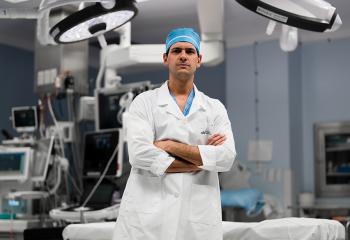
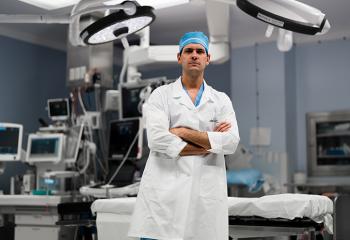
Throughout his care, Rob was deeply grateful for the heart health team at the QEII— especially the nurses in the cardiac care unit and his surgeon, Dr. Roger Baskett.
“Reflecting on my own experience puts a lot into a new perspective,” he says.
Rob and his wife had already been proud supporters of the QEII Foundation, making gifts over the years in support of heart health. After his surgery — and learning about a new, less invasive approach that’s already making a difference for some patients — he chose to give again. His recent donation supports the QEII’s new minimally invasive cardiac surgery (MICS) program; an innovative approach transforming heart health care.
Home to the region’s most specialized cardiac services, the QEII is also where nearly every heart health patient in Nova Scotia receives emergency or follow-up care — making advancements like this critical for patients across the province.
The MICS program first launched with minimally invasive mitral valve repairs — the same procedure Rob underwent through open-heart surgery — and is now expanding to include additional valve procedures, including aortic and tricuspid repairs. Unlike traditional open-heart surgery, which requires opening the chest, surgeons can repair the heart’s valves through small incisions between the ribs using a 3D camera and specialized instruments; innovative tools and technology that will be generously funded by QEII Foundation donors and our $450,000 fundraising goal for the project.
For patients who are eligible, MICS can mean a much smaller incision — roughly three centimetres instead of 20–25 — and hospital stays reduced to just three to five days.
The result is less pain, less scarring and a faster return to daily life.
“Anything that can make it easier on patients — a shorter recovery, less pain — that’s huge,” Rob says.
With donor support, the QEII’s MICS program will continue to grow by treating more patients, expanding the types of procedures available, training additional surgeons, and helping to recruit and retain top medical talent.
For Rob, supporting that progress is deeply personal.
He knows what it takes to recover and how much even a small difference in that experience could matter.
With spring on the horizon, Rob is looking forward to getting back outside — to walking in the woods, being active and spending time doing the things he loves. Simple moments that, not long ago, felt out of reach. And through his support, he’s helping ensure more patients can get back to those moments too.
Click here to discover more about MICS or make a donation today.