

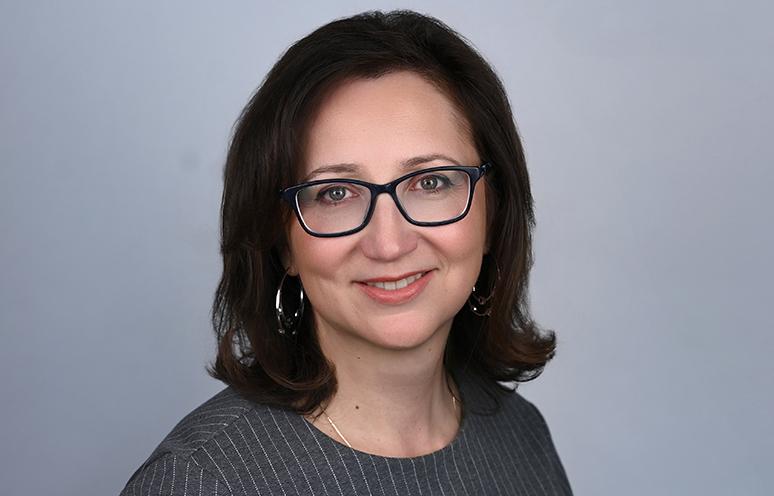
Dr. Paola Marcato is making tremendous strides in breast cancer research since being appointed the Canadian Breast Cancer Foundation Atlantic Region Endowment Chair in Breast Cancer Research at Dalhousie’s Faculty of Medicine in 2023 — a role made possible through funding from the QEII Foundation. CONTRIBUTED
QEII Foundation-funded research chair making strides for the future of cancer care
Developing new cancer treatments and understanding why the most common cancer in women spreads and sometimes resists treatment has become what Dr. Paola Marcato describes as a morally driven mission. She has devoted most of her career to studying breast cancer and how to improve outcomes for patients.
Since being appointed the Canadian Breast Cancer Foundation Atlantic Region Endowed Chair in Breast Cancer Research at Dalhousie’s Faculty of Medicine in 2023, Dr. Marcato has advanced research aimed at reducing deaths from the disease. Established in 2008 and funded through the QEII Foundation, this endowed chair has supported sustained, long term investment in breast cancer research; Dr. Marcato is the second researcher to hold the position.
According to Dr. Marcato, one of the main reasons people die from cancer is that their tumours do not respond to current treatments and later spread to other parts of the body. Her team focuses on biomarkers that can help predict which tumours are likely to resist therapy or respond to particular treatments. By matching patients to the most effective options as early as possible, they aim to avoid delays and spare patients from unnecessary side effects.
As part of the Marathon of Hope Cancer Centres Network, a Terry Fox Research Institute initiative to sequence 15,000 tumours from across Canada, Dr. Marcato is leading a study that will directly impact breast cancer patients in Nova Scotia. Working with pathologist Dr. Gillian Bethune and surgical oncologist Dr. Greg Knapp at the QEII Health Sciences Centre, her team is sequencing tumours from 255 local breast cancer patients, supported in part by local donors. Breast tissue samples from Nova Scotia will be analyzed over the next few years, helping to build a richer picture of tumour biology in this region.
Dr. Marcato’s team is also exploring novel treatments, including a new drug developed in collaboration with a medicinal chemist at the University of Pisa in Italy. The drug specifically targets an enzyme called ALDH1A3 (often enriched in the most aggressive, treatment resistant cancers) that is associated with cancer stem cells and a higher likelihood of metastasis. There are currently no approved medications that directly target this enzyme.
To protect and translate this work, Dr. Marcato and collaborators formed a start up company, Theranib Inc., to file patents, advance development of the drug, and ultimately partner with industry to bring it to patients. In preclinical models, the drug has shown high potency and efficacy against ALDH1A3, and studies in mice suggest it can prevent breast cancer from spreading when given once daily. The drug can also be given orally in these models, which raises the possibility that, if successful in clinical trials, it could one day be taken as a pill—potentially making treatment more accessible for people who live far from cancer centres.
Significant work and funding will still be required to move this candidate from preclinical testing into clinical trials and, eventually, routine care. Support from the QEII Foundation and two Canadian Institutes of Health Research (CIHR) grants has been crucial in advancing the research to this stage.
“The QEII Foundation has been a tremendous partner, as have the surgeons and oncologists at the QEII with whom I collaborate,” says Dr. Marcato. “There is so much important work happening here, and this chair helps keep that momentum going.”
During her time as endowed chair, Dr. Marcato has also published work related to precision medicine for breast cancer and continues to advocate for improved access to breast screening in Nova Scotia. In addition to her focus on breast cancer, she is increasingly exploring approaches and targets that may apply across multiple cancer types, with an eye toward broader impact.
“Our goal is to make our work reach as many patients as possible, by advancing precision medicine and moving new drugs into the clinic,” she says. “That is what really drives me.”